The global demand for accessible, affordable, and clean drinking water has accelerated innovations in water distribution systems. Two technologies playing a vital role in this transformation are expendedora automática de agua (automatic water vending machines) and bombas de agua (water pumps). This article explores the technological foundations, benefits, challenges, and socio-economic implications of both systems, especially in the context of underserved urban and rural communities. By analyzing their synergy and impact, we highlight how these technologies contribute to broader goals of sustainability, public health, and equitable resource distribution.
1. Introduction
Access to clean and safe water is a fundamental human right. Despite technological advances, millions worldwide still struggle to obtain this basic necessity. In response, engineers, entrepreneurs, and policymakers have turned to decentralized and community-focused solutions, including automatic water vending machines and water pumps. These solutions offer efficient water distribution with reduced dependency on large-scale infrastructure. This article presents a detailed examination of both technologies, focusing on their functions, integration, and potential within developing and emerging economies.
2. Understanding the Expendedora Automática de Agua
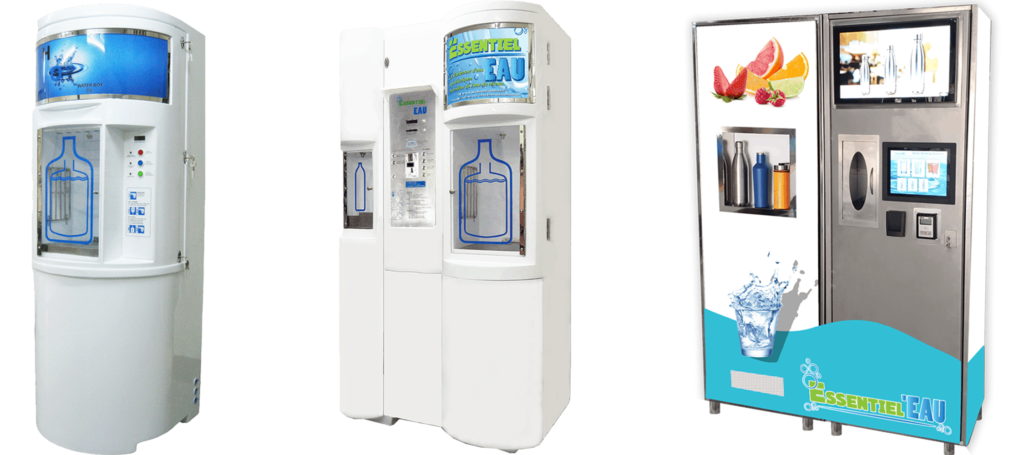
An expendedora automática de agua, or automatic water vending machine (AWVM), is a self-service unit designed to dispense purified water in pre-set quantities (typically in liters or gallons) upon user payment. These machines are commonly installed in residential neighborhoods, schools, transportation hubs, and low-income communities where piped water systems are unreliable or absent.
2.1. Key Components and Operation
A standard AWVM consists of:
- Water purification system: Includes sediment filters, activated carbon, reverse osmosis (RO), UV sterilization, or ozone treatment.
- Storage tanks: Separate tanks for raw and purified water.
- Dispensing unit: Allows users to collect water using their own containers.
- User interface and payment system: Accepts coins, bills, cards, mobile payment apps, or QR codes.
- Control system: Manages volume, sanitation cycles, and system alerts.
Some advanced machines feature Internet of Things (IoT) connectivity, enabling remote monitoring, real-time data analytics, and preventive maintenance.
2.2. Socio-Economic Benefits
- Affordable access: Water is sold at a fraction of bottled water prices.
- Community empowerment: Local ownership and franchise models promote entrepreneurship.
- Health benefits: Improved water quality reduces incidence of waterborne diseases.
- Environmental gains: Encourages use of reusable containers, reducing plastic waste.
2.3. Limitations
- Initial capital costs: Machines with RO and UV systems can be expensive.
- Maintenance needs: Regular cleaning and filter replacement are critical.
- Power dependency: Most machines require a stable electricity supply.
3. The Role of Bombas de Agua (Water Pumps)
Bombas de agua, or water pumps, are mechanical devices designed to move water from one location to another. These are essential in agriculture, municipal water systems, household supply, and especially in supporting AWVM operations.
3.1. Types of Water Pumps
- Centrifugal pumps: Ideal for moving large volumes over short distances.
- Submersible pumps: Placed directly in the water source; energy efficient and quiet.
- Jet pumps: Common in residential systems; suitable for shallow wells.
- Solar pumps: Sustainable, especially in off-grid or rural locations.
- Peristaltic/dosing pumps: Used for precise chemical addition in purification systems.
3.2. Integration with AWVMs
Water pumps are a backbone of AWVM infrastructure, enabling:
- Transfer of raw water from tanks or wells to purification units.
- Pressure control for consistent dispensing.
- Circulation systems for automated washing and sterilization inside the machine.
- Flow regulation for accurate volume output.
Without reliable water pumps, the operational efficiency and user experience of an AWVM would be severely compromised.
3.3. Challenges and Considerations
- Power consumption: High operational costs in areas with expensive electricity.
- Mechanical wear: Pumps handling untreated water may suffer from sediment or debris buildup.
- Noise: Particularly in centrifugal models used in residential zones.
4. Case Studies and Real-World Applications
4.1. India: Decentralized Water Kiosks
Several Indian states, such as Andhra Pradesh and Telangana, have adopted solar-powered AWVMs in villages with unreliable water access. These kiosks, equipped with submersible solar water pumps, provide residents with safe drinking water at nominal costs. The system promotes women-led community operations and integrates with national sanitation and health goals.
4.2. Mexico: Urban Solutions in Low-Income Areas
In Mexican cities like Guadalajara and Mexico City, private operators have installed expendedoras automáticas de agua in low-income neighborhoods. These units rely on centrifugal booster pumps for steady pressure and ensure purified water at a lower cost than bottled alternatives, directly impacting urban public health.
5. Environmental and Public Health Impacts
5.1. Reduced Plastic Waste
By encouraging the use of reusable containers and eliminating the need for single-use plastic bottles, AWVMs help reduce plastic pollution. This aligns with global environmental policies such as the UN Sustainable Development Goals (SDGs), particularly Goal 6 (Clean Water and Sanitation) and Goal 12 (Responsible Consumption and Production).
5.2. Safer Water Supply
With proper maintenance and water testing, AWVMs can significantly reduce exposure to harmful pathogens. Integrated pumps ensure that pressure and flow rates are controlled, minimizing contamination risks during the dispensing process.
5.3. Renewable Integration
Solar-powered water pumps integrated into AWVMs reduce carbon footprints and make systems viable in off-grid or rural environments
6. Future Perspectives and Innovation
6.1. Smart Water Systems
The rise of smart cities has introduced IoT-enabled AWVMs and pumps. These systems allow real-time quality monitoring, dynamic pricing, predictive maintenance, and usage analytics to improve efficiency and transparency.
6.2. Hybrid Business Models
Entrepreneurs and municipalities are exploring models combining AWVMs with community water filters, health education, and even micro-retail services to increase financial sustainability.
6.3. Policy and Regulation
For long-term success, governments need to establish clear standards for:
- Water quality control and monitoring
- Technical certification of AWVMs and pumps
- Public-private partnerships for installation and maintenance
7. Conclusion
The combined use of expendedoras automáticas de agua and bombas de agua represents a powerful solution to the global challenge of water accessibility. While each technology serves a different function, their integration creates a scalable, sustainable, and community-friendly water distribution system. With proper investment, regulation, and innovation, these systems can play a significant role in reducing water scarcity, improving public health, and promoting environmental sustainability across diverse regions.
References
- WHO/UNICEF Joint Monitoring Programme (JMP). “Progress on Household Drinking Water, Sanitation and Hygiene.” 2023.
- FAO. “Water Pumping Technologies.” Food and Agriculture Organization, UN.
- Singh, R., & Gupta, P. (2021). “Decentralized Water Purification Models in India.” Journal of Environmental Engineering.
- Ecosoft, Puritec, and industry technical datasheets.
- World Bank. “Access to Safe Water and Its Economic Impacts.” Policy Brief, 2022.
About the Author
